
Karina Koryska

UX/UI Designer • Digital Health • Accessibility

Picture of Karina Korytska

Hello

I'm a UX/UI Designer focused on digital health and accessibility, with a strong interest in complex, research-driven products.

I work at the intersection of user research and systems thinking and translated complexity into clear structures, user flows and scalable design solutions. During my studies, I combined an accelerated graduation track with 1.5 years of professional experience, which helped me move beyond visual design into problem framing, user journeys and product-level thinking.

I'm particularly interested in designing for complex environments like healthcare and education, where clarity, reliability and accessibility have a real impact.

Currently open to junior UX roles in research-driven teams, as well as selective freelance collaborations.

e-mail k.korytska@gmail.com
LinkedIn linkedin.com/in/karina-korytska
Dribbble dribbble.com/karinakorytska
View all works

Ouders Inc Platform

Designing an accessible course platform for new parents with lower literacy

2025

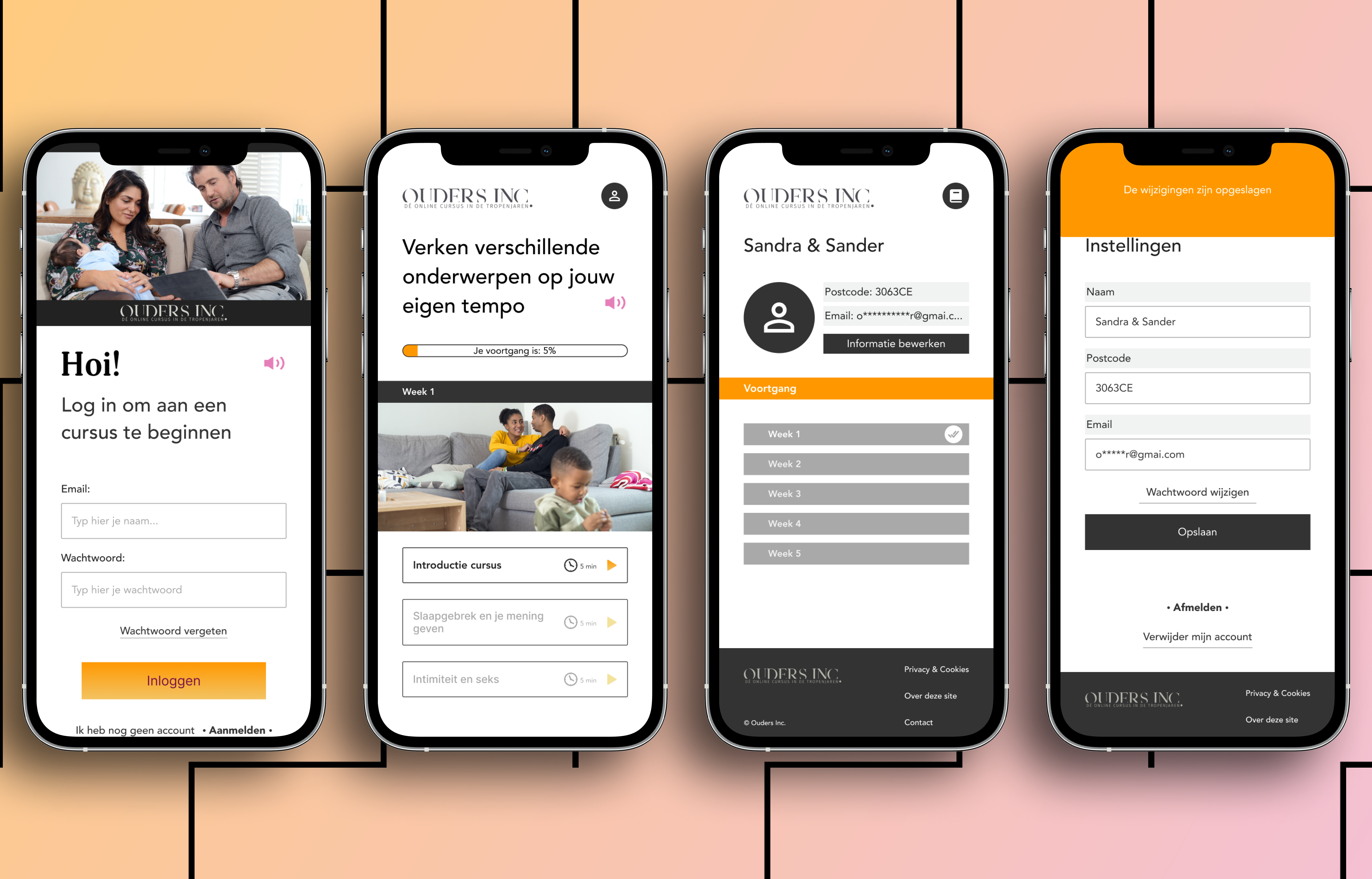
Mockup of mobile interfaces of the parenting course app

Role:

UX/UI designer

Context:

Internship project

Focus:

Accessibility, content clarity, sensitive UX

Overview:

Ouders Inc is a digital course designed to support first-time parents with accessible and easy-to-understand content. The project initially started with adapting an existing course structure to match the visual identity of the platform. During this process, it became clear that the structure and flow were not suitable for the target audience, particularly users with lower literacy levels, requiring simplified language and clear structure. This led to a shift from a visual update to a full redesign, focusing on clarity, accessibility and supportive communication.

The challenge:

The platform needed to support users who may experience:

  • Lower literacy levels
  • Limited digital confidence
  • Sensitivity around parenting and relationship topics

The challenge was to create a clear, non-judgmental and easy-to-use experience that encourages users to continue the course and engage with sensitive topics.

Design principles:

The design was guided by three core principles:

  • Clarity over complexity: simplifying content and structure to reduce cognitive load.
  • Emotional safety: avoiding judgment and supporting sensitive interactions.
  • Guided progression: helping users move forward with confidence.
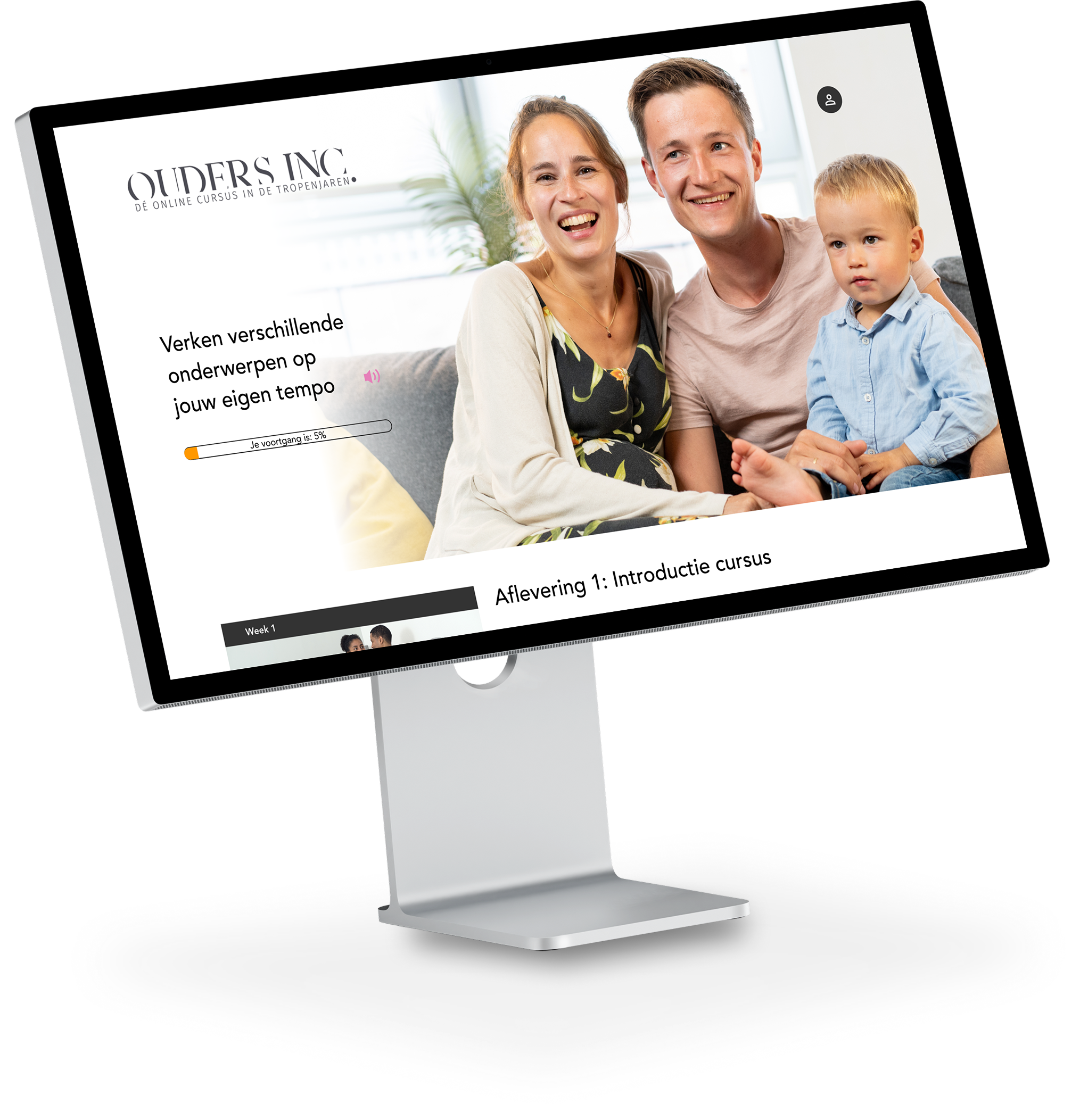
Desktop mockup of the main screen

Course navigation & overview:

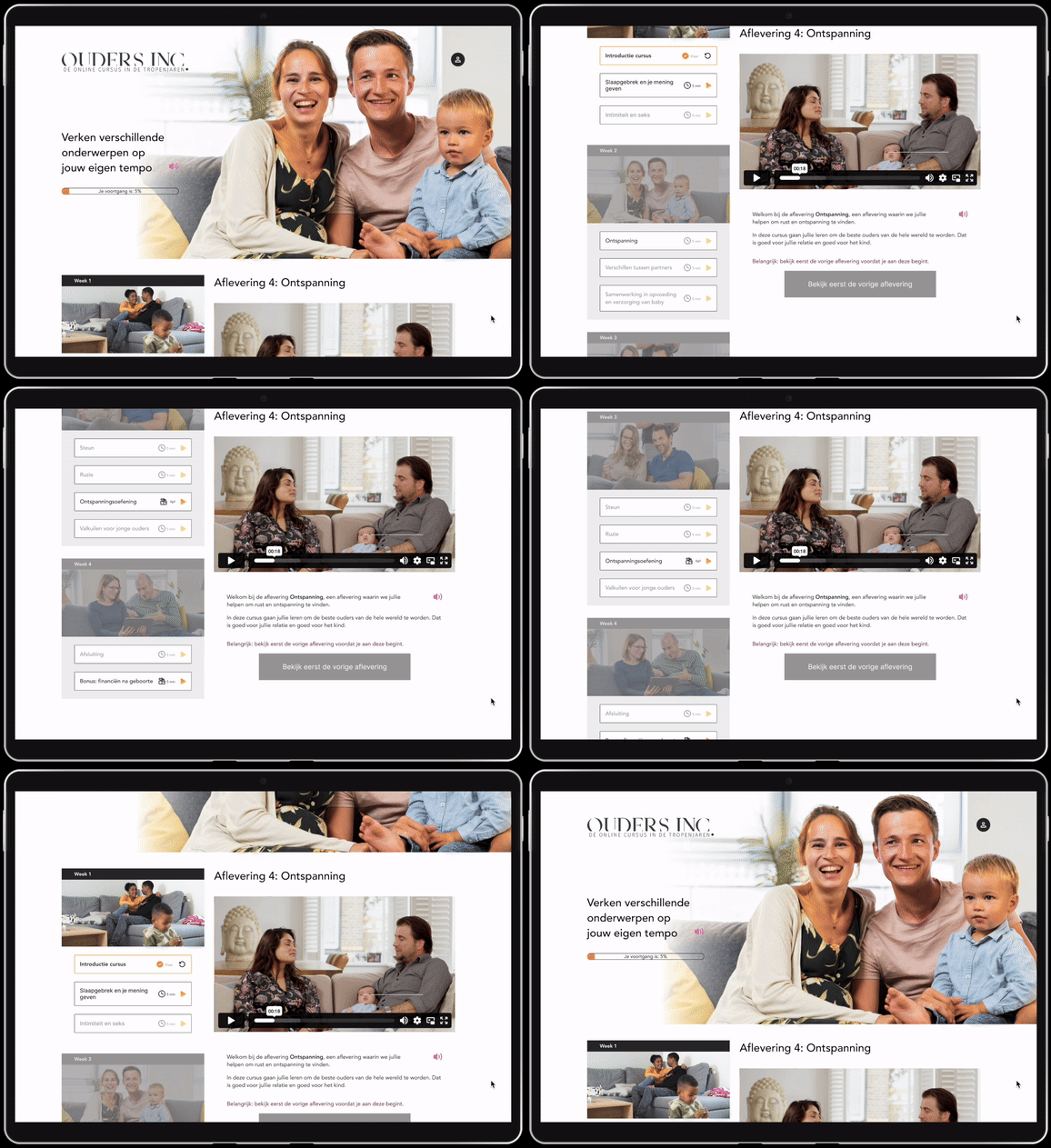
The course interface is designed to provide a clear overview and reduce uncertainty.

All modules are visible and accessible from the start, allowing users to preview upcoming topics and video content.

A progress indicator helps users understand their position in the course and how much remains.

The layout is structured to remain compact and predictable: navigation on the left, with a persistent content preview on the right.

Additional accessibility features include audio support for titles and text, as well as clear feedback and navigation cues.

Animated preview of Ouders Inc website being scrolled

Key design decisions:

Design decisions focused on reducing cognitive and emotional barriers, making the course accessible and supportive for a sensitive user group.

Designing for optional engagement

Users can skip sensitive topics, reducing pressure and allowing them to engage at their own pace.

Supporting orientation through progress

A clear progress indicator provides structure and helps users feel in control of their journey.

Reducing uncertainty

Previewing upcoming topics prepares users and lowers emotional resistance.

Avoiding judgment in feedback

The interface avoids “right or wrong” responses, creating a safer and more supportive experience.

Using supportive and simple language

Content is written using B1-level language to support users with lower literacy and improve comprehension and encourage engagement.

Design evolution:

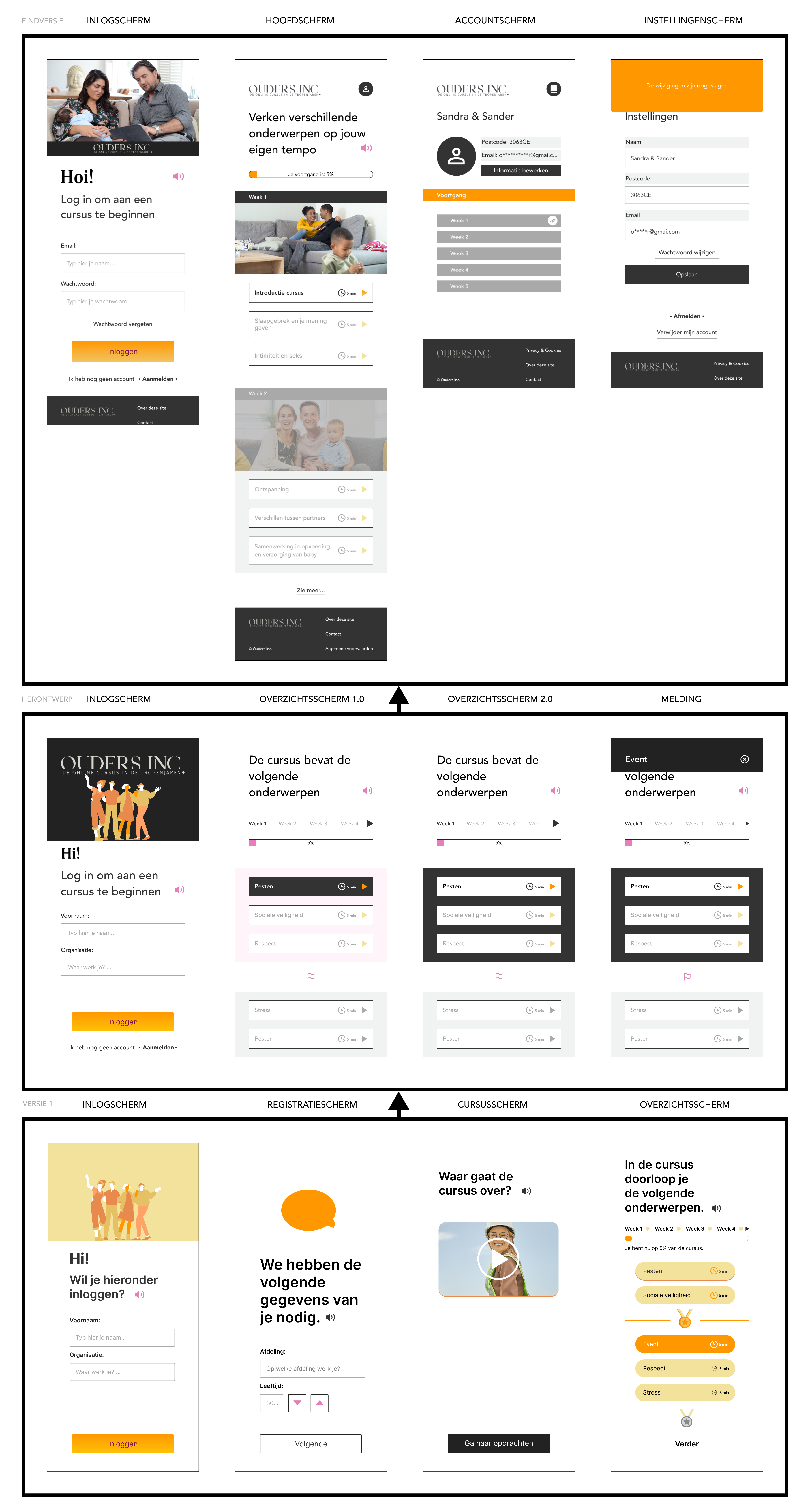
The initial version followed an existing structure, which resulted in a visually updated but still complex and unclear experience. Through iteration, the design shifted towards a more simplified and structured approach, improving readability, navigation and overall usability for users with lower literacy levels.

The process:

The project evolved from an initial visual redesign into a full platform redesign based on usability findings and team discussions. A mobile-first approach was used throughout the design process. Design decisions were continuously validated through presentations and feedback sessions with developers and domain experts. Content and language were carefully reviewed and aligned with B1-level guidelines in collaboration with a scriptwriter and language specialists.

Constraints & Collaboration:

The design needed to align with existing backend structures to ensure scalability and efficient implementation.

Components were designed to be reusable and consistent with the existing visual system.

Error messages, feedback and feedforward cues were carefully designed to support usability and reduce confusion.

Vertical comparison of design iterations showing final version at top, intermediate in the middle, and original concept at the bottom

Reflection:

This project strengthened my ability to design for accessibility and emotionally sensitive contexts. I learned how to simplify complex content, create supportive user experiences and collaborate with experts to improve communication. It reinforced the importance of empathy, clarity and responsibility in UX design.